
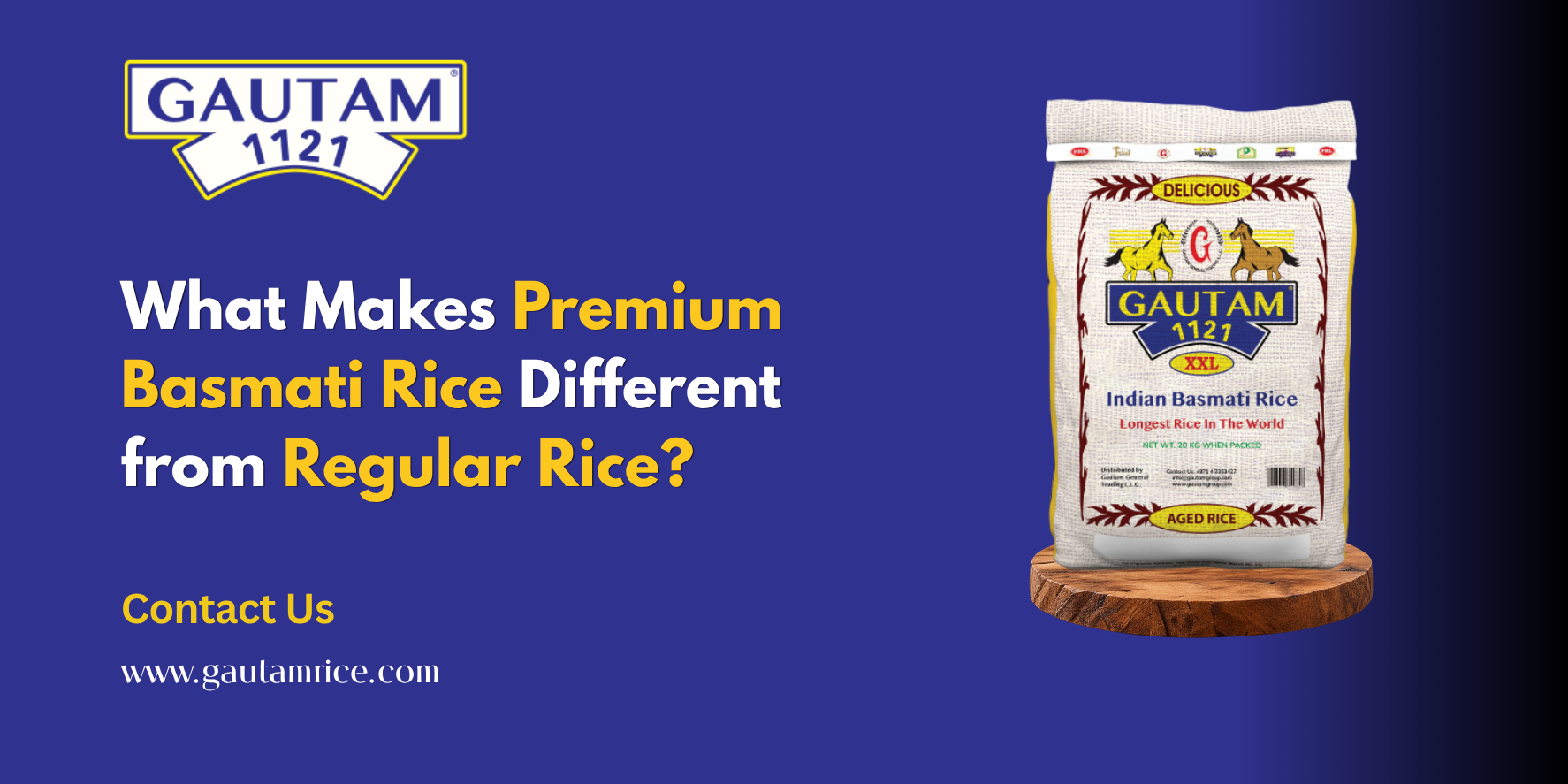
Long grains alone do not make rice premium. Basmati varieties can differ considerably in aroma, texture, grain uniformity and cooking performance.
What happens before the rice arrives in the kitchen is important too, including how the grains are picked, processed, and aged. These details help explain what separates premium basmati rice in the UAE from regular rice.
Where Does the Difference in Basmati Rice Actually Begin?
The difference begins with the variety being cultivated. Basmati is distinguished from many other types of rice by characteristics such as its slender grain shape, distinctive aroma and elongation during cooking
Premium Basmati rice typically undergoes careful grading and sorting to achieve greater consistency in grain size, shape and quality. Grains can be assessed for uniformity and the proportion of broken pieces.
Where the rice is grown also matters – particularly when buying something marketed as Indian basmati.
What Happens to Basmati Rice After Harvest?
Harvesting is one stage of a longer process. After harvest, the rice is cleaned, milled, graded and prepared for packaging. Careful processing helps maintain grain integrity and the characteristics expected from the variety.
The quality of processing shows up in the finished product. Excessive broken grains or inconsistent sizing can become obvious during cooking. For premium rice, careful processing helps maintain grain integrity, uniformity and consistent cooking performance.
Why Is Basmati Rice Aged Before It Is Sold?
Ageing is an important factor that can influence the cooking quality of basmati rice. After harvest, naturally aged basmati is stored for a period before it goes to market.
During that time, the grain’s moisture content changes gradually. This affects how the rice behaves during cooking – including water absorption, elongation, and how well the grains separate. The ageing period needs to be managed properly, though. Keeping rice for longer without the right variety, storage conditions, and processing doesn’t produce the same result.
Gautam Rice uses naturally aged basmati as part of its premium range, including rice aged for 24 months.
Why Does the Same Amount of Rice Look Different After Cooking?
Basmati changes considerably during cooking, more so than many other rice varieties. A quality grain elongates significantly while keeping its slender shape.
Premium Basmati should have the following qualities:
- Obvious grain elongation
- Separation of the grains when cooked
- Light and distinct texture
- Uniform appearance
- Natural Aroma
Regular rice may also cook well, but its qualities will greatly depend on the variety. Not all types of rice are expected to elongate or have the same aroma.
What Makes 1121 Basmati Different From Other Varieties?
1121 is known for exceptionally long, slender grains. It’s widely used in dishes where long, separate grains are part of what makes the meal look and taste right.
When choosing a 1121 basmati rice supplier in Dubai, the variety name is only the starting point. Grain uniformity, processing quality, ageing, and packaging all still matter. A good 1121 basmati should hold its shape and elongate noticeably during cooking – characteristics that have made it popular for both household and commercial use.
Does Indian Origin Affect Basmati Quality?
Origin is worth considering when buying pure Indian basmati rice UAE. Basmati is closely identified with particular varieties and geographical regions of cultivation in the Indian subcontinent, and the properties of the grain are linked to the place and method of its cultivation.
Checking the product information and packaging helps confirm variety and origin- especially important when comparing products that use similar descriptions but may not contain the same type of rice. For buyers specifically looking for Indian basmati, origin should sit alongside grain characteristics and processing in the decision.
What Can You Notice Without Tasting the Rice?
Several things are visible before the rice even reaches the pot.
Grain shape – Basmati should look long and slender, not short or rounded.
Uniformity – Grains should be reasonably consistent in size and shape throughout the pack.
Broken grains – A high proportion of broken pieces can affect the cooked appearance.
Colour – Grains should have a clean appearance appropriate to the variety.
Aroma – Good-quality basmati rice has a characteristic aroma that may be noticeable even before cooking.
These checks don’t tell you everything, but they’re a useful way to compare products before buying.
Why Does Consistency Matter for Wholesale Buyers?
For restaurants, caterers, and retailers, rice needs to perform consistently in larger quantities. That’s where wholesale basmati rice suppliers in Dubai need to maintain reliable standards.
A restaurant can’t adjust its preparation every time the rice behaves differently. Consistent grain size, cooking characteristics, packaging, and a reliable supply are desired by commercial buyers.
At Gautam Rice, we offer premium quality basmati for household as well as bulk requirements with a focus on uniformity of grain quality and naturally matured rice.
So, What Really Separates Premium Basmati From Regular Rice?
No single feature defines it. The difference comes from variety, grain selection, processing, aging, origin, and how the rice performs during cooking.
Regular rice works well for everyday meals, but premium basmati offers specific characteristics that matter to buyers who care about the result- long, slender grains, natural aroma, noticeable elongation, and consistent results from one batch to the next.
Gautam Rice brings these together through its range of naturally aged basmati products, giving buyers options like 1121 basmati for different cooking and purchasing requirements.
FAQs
1. What distinguishes basmati rice from ordinary rice?
What makes Basmati different from other varieties of rice is its combination of variety, grain, processing, age, aroma, and cooking qualities.
2. Is there a premium variety of basmati?
1121 is a long-grain aromatic rice with slender grains that elongate considerably as they cook.
3. How do you spot genuine Indian basmati rice in the UAE?
Check the packaging for information on variety and origin rather than relying only on broad marketing descriptions.
4. Is aged basmati rice the best?
Aging affects the moisture, water absorption, elongation, and separation of the grain – and therefore the final appearance and texture.
5. Is Basmati rice available wholesale in Dubai?
Basmati can be bought wholesale for sale to restaurants, caterers, retailers, and other customers.

 .
A wholesome vegetarian dish with rice, lentils, spices, and herbs – perfect as a main course or side, served with lemon wedges or caramelized onions.
 Made with Gautam Rice, trusted for its quality and heritage.
 Ingredients:
– 4 Medium Bell Peppers (any color)
– 2 Tbsp Olive Oil
– 1 Large Onion
– 3 Garlic Cloves
– 1 ½ Tsp Coriander or Cumin
– 1 Tsp Turmeric
– ¼ Tsp Red Pepper Flakes
– 1 Cup Gautam Basmati Rice
– 1 ½ Cups Cooked Lentils
– ½ Cup Dried Lentils (boiled in 2 Cups Water + ½ Tsp Salt until tender)
– 1 Tsp Salt
– 1 ½ Cups Tomatoes
– ⅛ Tsp Black Pepper
– 2 Cups Vegetable Broth
– ½ Cup Chopped Parsley
– Lemon wedges and/or caramelized onions
 Instructions (Summary):
– Heat olive oil, sauté onion and garlic.
– Stir in rice, spices, then add broth, lentils, and tomatoes.
– Cook until rice is halfway done, then add parsley.
– Preheat oven to 350°F (180°C).
– Cut peppers in half, remove seeds, season with salt.
– Stuff with rice-lentil mixture.
– Bake 40 minutes (or air fry 30 minutes) until tender.
– Garnish with parsley and serve with lemon wedges.